
Why does a commercial door lock stop working just when your staff needs access? A sticking key, loose handle, or door that will not latch can interrupt daily work and make it harder to secure your property. Regular use, poor installation, weather exposure, and worn door hardware can all affect how a lock works. Knowing what to look for helps you spot trouble early and decide when you need business door lock repair. This guide covers common reasons commercial locks fail and the signs you should watch for.
Wear and Tear Over Time
Wear and tear is the single most common reason commercial locks fail. Over time, internal pins, springs, and tumblers wear down, making the cylinder stiff. You may notice the key turns poorly, catches mid-turn, or a deadbolt suddenly doesn’t extend cleanly. An average lock lasts about seven years, though high-traffic doors may decline much sooner. Most commercial locksmiths in Pasco County see these issues in busy buildings.
Door hardware also wears with regular use. Hundreds of daily cycles loosen screws holding the hinge to the frame or door. As a result, the strike plate misses, and the commercial door won’t latch or swings “low.” Pivot hinges on heavy glass doors and traditional butt hinges on aluminum frames need matched hardware. You may notice a scraping sound or visible lean when the door won’t latch.
Poor Installation
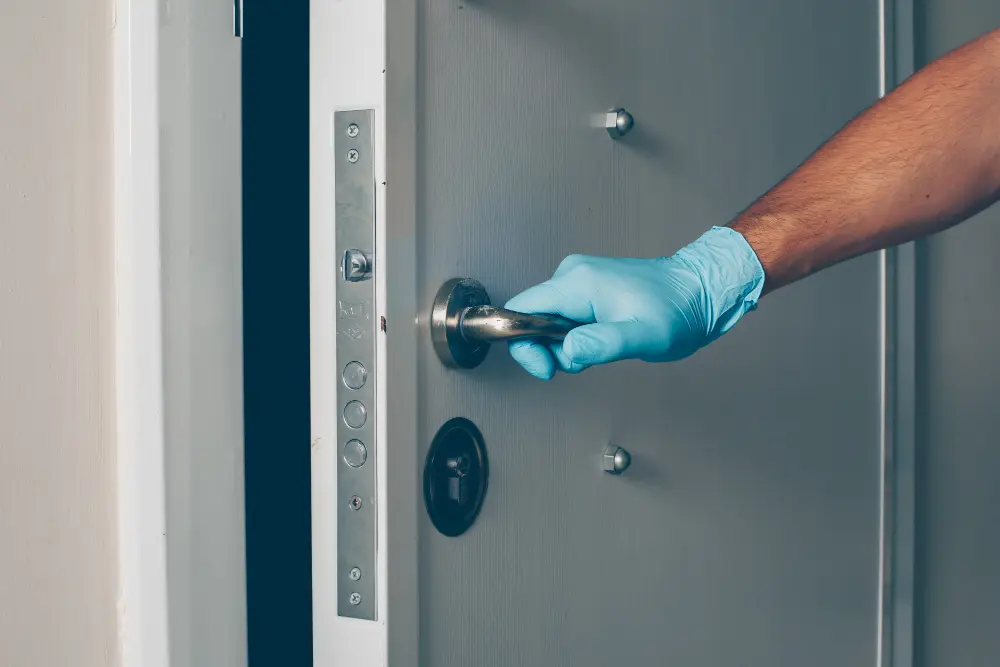
Poor installation can only perform well when every lock component is fitted correctly. A deadbolt that isn’t properly aligned with the strike plate creates extra stress during use, causing the bolt to rub against the plate and wear down both components faster than normal.
Over time, friction can prevent the lock from functioning smoothly. You may be tempted to try quick fixes, such as applying WD-40 or using a bent paperclip. However, household oils can attract dirt and cause further jamming. Forcing or drilling the lock can also void your warranty, damage internal parts, warp the cylinder, and cause irreversible damage.
Weather and Environmental Exposure
Weather can damage commercial locks through humidity, saltwater exposure, and rainfall. Moisture and salt cause corrosion, while temperature fluctuations make metal components and door frames expand and contract, which can pull the lock out of alignment or cause it to stick.
You may notice a gritty or grinding feel when turning the key, visible rust on the cylinder or latch components, or difficulty turning the key during or after wet weather.
Dust and debris can also clog the mechanism, making regular cleaning and lubrication important. Check for damaged weather stripping, gutters directing water toward the entrance, settled sidewalks, or worn threshold gaskets.
Use the correct replacement profile for your door system and lubricate the lock as recommended. Corrosion-resistant hardware designed for coastal conditions can help prevent damage. Timely lock repair can address minor issues before they require a full commercial hardware upgrade.
Frame Shift From Building Settlement
Another reason is building movement. Buildings settle unevenly, and swelling, settling, or warped timber can make the door frame twist a few millimeters out of square. You may notice the door binds, feels off-center, or needs a hard push to close. These alignment issues can cause the latch to no longer line up with the strike plate, so the lock won’t engage. The frame may need shimming or realignment. Adjusting the door hinges, strike plate positioning, or reboring or resizing latch openings can restore secure engagement before the lock mechanism becomes compromised.
Failing Door Closer
An overhead closer pulls the door shut at a controlled speed. When hydraulic fluid leaks or the spring weakens, the door slams, doesn’t close fully, or never engages the lock. You may need to have it inspected because closers can be adjusted or replaced, but a leaking closer must be replaced.
Lockset or Deadbolt Failure
Commercial locks, including mortise locks and panic bars, can fail when moving parts inside wear out. Internal pins and tumblers, internal springs, latch bolts, or strike plates may cause problems because regular use can wear down these components. A misaligned strike can also affect the lock, even when the door isn’t binding on the hinge side. You may notice increased resistance, a key fits loosely or spins without engaging the lock, or you need to jiggle the key multiple times before it turns properly.
Forcing the key risks breaking a key or damaging the cylinder, sometimes causing total failure to unlock. Other warning signs include a latch that doesn’t fully retract or bounces back, a door that closes but doesn’t stay locked, or loose or wobbling strike plates or hardware.
A March 2025 forum discussion documents a broken component in a multipoint locking mechanism. This shows one possible internal fault, not how often it happens in commercial buildings. A professional locksmith can assess whether to rekey or replace the lock and recommend upgraded parts for better durability.
Broken Or Snapped Keys Inside The Lock Cylinder
One of the most frustrating issues is a snapped key left stuck in the lock. Metal fatigue, excessive force, or internal lock resistance can cause this problem. Avoid using household items, as they may push the fragment deeper and damage the cylinder or surrounding mechanism. A locksmith uses specialized extraction tools to remove it safely. Never use glue, drill, or force the key out. You may need to rekey the lock, get a replacement key on the spot, or arrange a full lock replacement if the damage is severe.
Electronic Lock Malfunctions & Power Issues
The final reason is an electronic fault in modern commercial locks. Digital locks, keypad locks, or smart locks may stop working because of a drained battery, failure of the backup power supply, Firmware errors, or touchpad freezing due to humidity. In coastal areas with high moisture and fluctuating temperatures, Moisture intrusion affecting sensors and internal wiring can cause problems. Access is often completely blocked, so you may need a locksmith to reset, reprogram, or bypass locks without damaging doors or frames.
Need Help With a Commercial Door Lock?
Commercial lock problems can interrupt daily work and put your property’s security at risk. locallocksmithprosllc can help with business door lock repair and other commercial lock concerns. Contact us today to discuss your needs and get help restoring proper lock function.